



























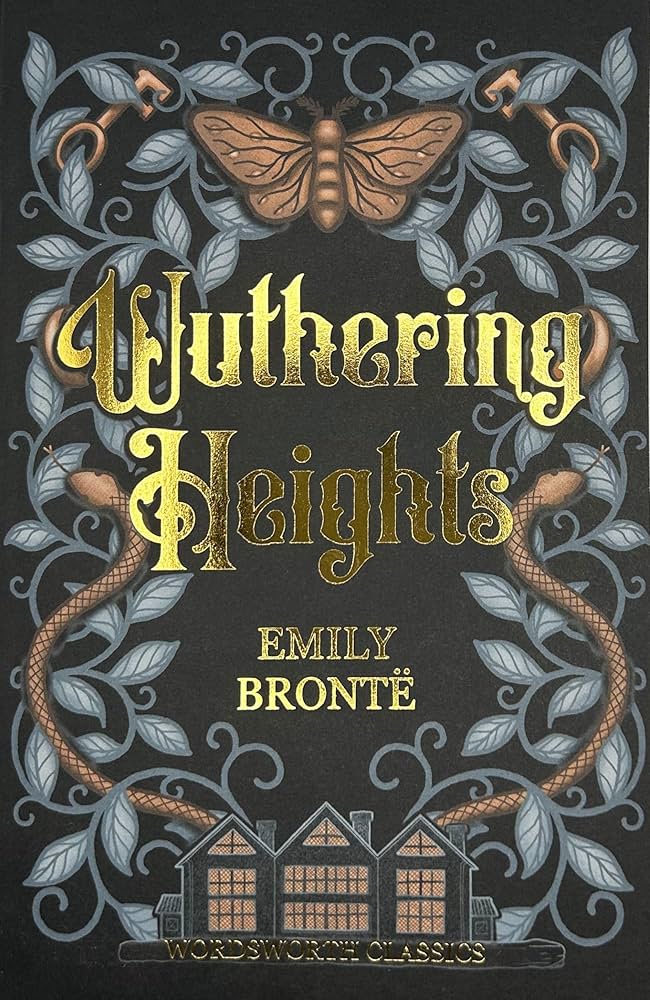
The gothic film Wuthering Heights, starring Jacob Elordi and Margot Robbie, released on Feb. 13 and has since ignited conversations all over Bishop Gorman for its haunting cinematography, emotional performances, and bold reimagination of Emily Brontë’s classic tale of love and revenge.
The film takes place in the isolated North England countryside during the late 18th century, following a Gothic tale of destructive love and revenge between protagonists Catherine and Heathcliff. What begins as an innocent childhood bond slowly unravels after Catherine is betrothed to another man, spiraling into jealousy and bitterness. The film ends tragically with Catherine’s death, seemingly putting an end to the affair that defined both of their lives.
The plot has since raised questions and controversy from fans all over. Debates about whether or not the lovers belong together have divided viewers.
Bella Dupreez ‘26, sees the story as romantic at its core, claiming “it is a love story but one that turns toxic and destructive.” She argues that Catherine and Heathcliff were trauma-bonded from a young age and “It is external factors that drive the destruction” she said. According to Dupreez, “Cathy and Heathcliff are madly in love and the fact that they cannot be together due to social expectations is what drives the insanity.”
Others disagree, like Lily Reech ‘26 who believes the relationship was insincere. “I don’t think it was genuine,” she said, “I think that they just wanted each other and were possessive over each other.” Reech acknowledged that the film could be interpreted as both a love story and a tragedy, but ultimately views it as “destructive obsession”.
Gia Toms ‘26 offers a more nuanced perspective. “I think that the love between them was genuine, however, they did not know how to express it in the right way to one another,” she said. Toms described the love as present, but “very twisted.” Still, she hesitates to label the film as a love story or an obsession narrative, summing it up to “right person, wrong time”.
Beyond the love story itself, the casting choices have inspired significant discussion.
Dupreez commended the performance but criticized the decision to cast a white actor as Heathcliff. In Brontë’s original novel, Heathcliff’s racial ambiguity fueled the central theme of isolation, but in the film this matter was neglected. Dupreez claims that “making Heathcliff white erases this central theme of racism within the 18th century and Cathy’s internal struggle of wanting to love him.”
Dupreez also critiqued the visible age difference between the leads, noting that Elordi “looks extremely younger than Margot Robbie,” which at times felt distracting on screen.
Toms, however, took a dissimilar stance. “I liked the cast because I thought they all played very well,” she said. “I understand there is some controversy which affected the overall film, however, they did not explain the film to be historically accurate, so I personally think that the casting was great.”
While debates over authenticity and interpretation rage on, many viewers praised the film’s overall artistry.
Ella Redden ‘26 admitted that she loved the movie for “its cinematic expression and storytelling,” but was “absolutely heartbroken that the two couldn’t have been together.”
Similarly, Toms described her viewing experience as “very shocking,” saying she went in knowing nothing and “came out of it distraught.”
Whether interpreted as a tragic romance, a cautionary tale of obsession, or a cinematic reimagining of a literary classic, Wuthering Heights has undeniably made a mark at Bishop Gorman. The blending of modern performances with Gothic intensity has challenged viewers to decide for themselves if it was love that destroyed Catherine and Heathcliff or the world around them.